ORIGINS OF INFLUENCE IV:
The Alfred Stieglitz Collection of Modern Art
March 2024-March 2026
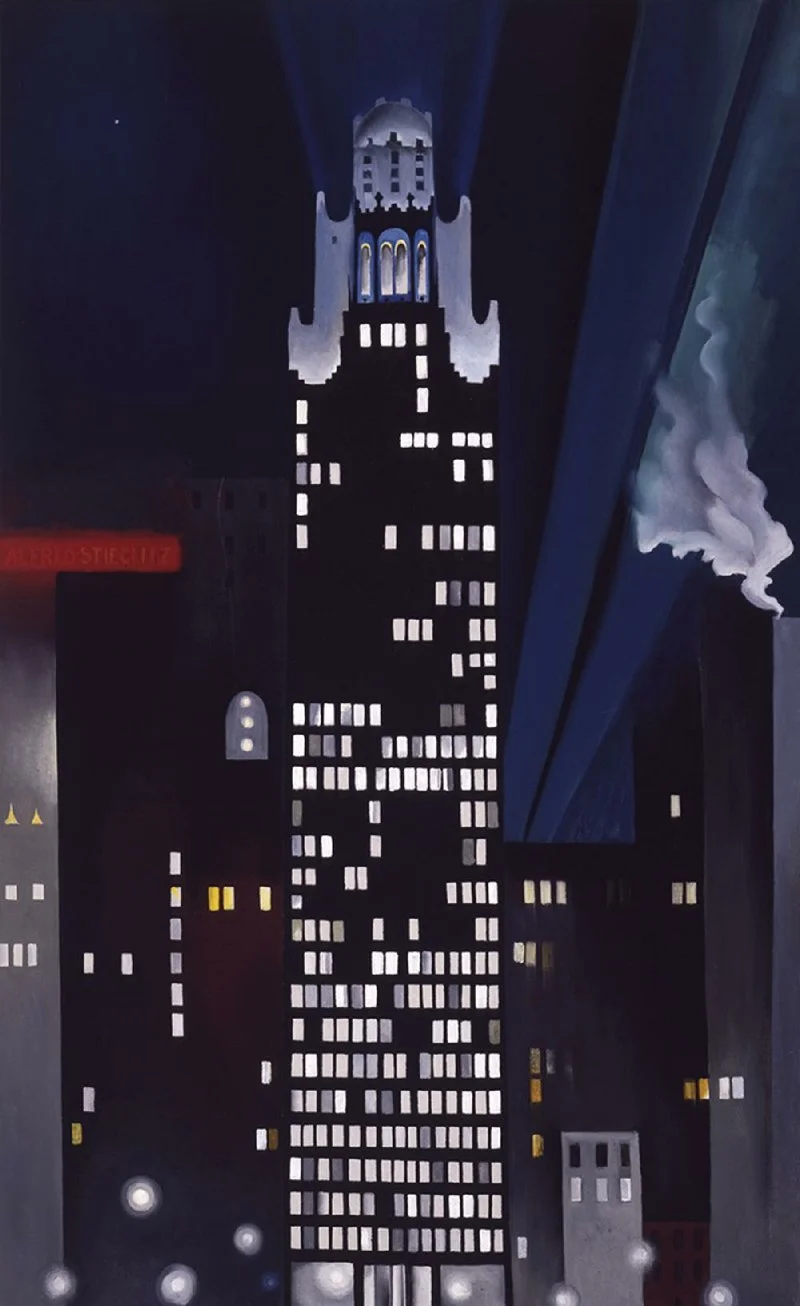
(Main Level)Georgia O’Keeffe, Radiator Building — Night, New York (1927)
Alfred Stieglitz Collection
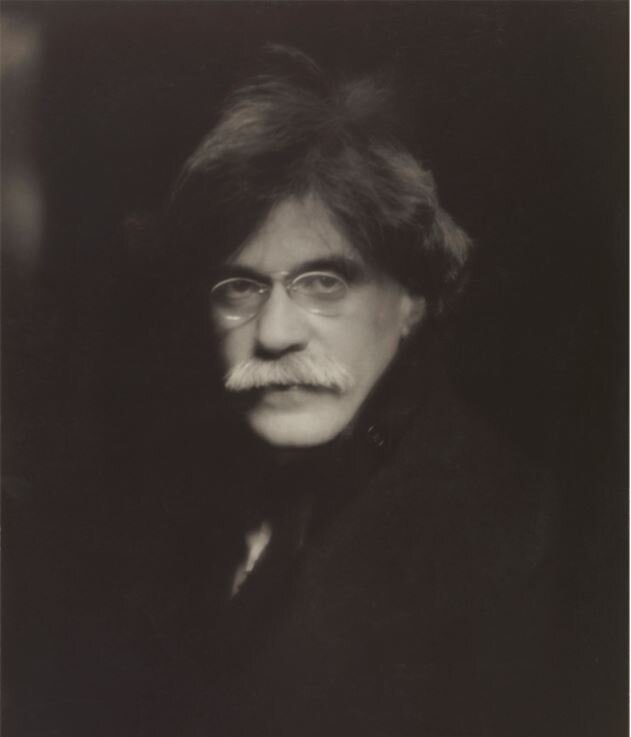
Alfred Stieglitz (1864–1946), a pivotal figure in American modern art, revolutionized the field as a photographer, gallery owner, and editor. His influential galleries developed modern American artists and served as conduits for European modernists to reach American audiences. After Stieglitz's death in 1946, Georgia O'Keeffe (1887–1986), with the assistance of Doris Bry (1920-2014), undertook the task of cataloging his collection, donating a significant portion to various institutions both domestic and abroad. Among the first recipients was Fisk University, which included institutions such as The Art Institute of Chicago, The Metropolitan Museum of Art, The National Gallery of Art, and The Philadelphia Museum of Art, among others. The donations extended to The Museum of Fine Arts in Boston, The Library of Congress, The San Francisco Museum of Modern Art, The Phillips Collection, The George Eastman House, and The National Museum of Modern Art in Tokyo, Japan.
The Connection

Dr. Charles S. Johnson (1893-1956), the first African-American president of Fisk University, and Carl Van Vechten (1880-1964), a prominent New York writer, photographer, and philanthropist, played a key role in O'Keeffe's decision to select Fisk University as beneficiaries of the collection. This gift led to establishing the university's first permanent art gallery in 1949, named in honor of Van Vechten, on November 4th.Pearl S. Creswell (1912-1994) led the gallery and served in various capacities from 1949 to 1989. She was instrumental in connecting the campus and the community with the collection.
The Alfred Stieglitz Collection, comprising 101 items including paintings, photographs, drawings, prints, sculptures, and a selection of African artifacts, showcases Stieglitz's extensive engagement with the modern art movement and his relationship to American modernists. The collection provides a remarkable introduction to Stieglitz as both an artist and a collector, illustrating his network and the early modernist movements in America and Europe.

Diego Rivera, Le sucrier el les bougies (Sugar Bowl and Candles ). (1915) (On Display) Better known for his monumental murals depicting Indigenous heritage, working-class laborers, and Mexican national history, Diego Rivera’s earlier works—like this still- life painting— represent his practice when he lived in Paris from 1911 through 1920.
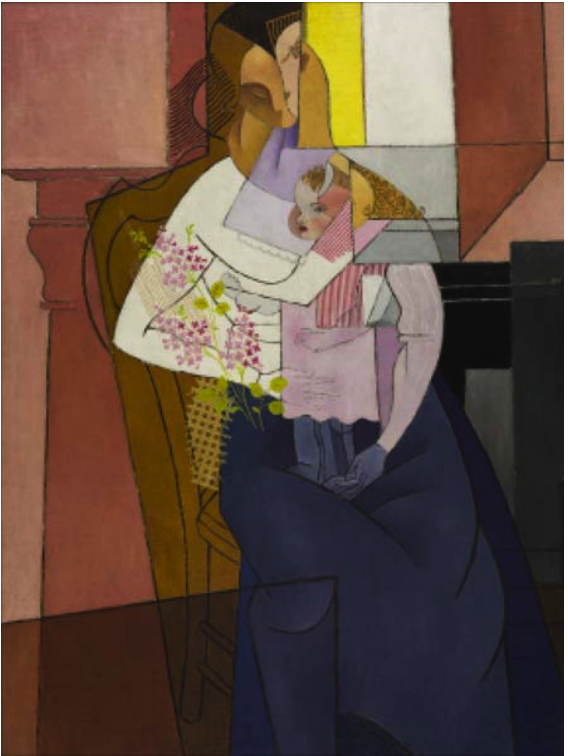
Gino Severini, Femme et enfant (1916) (On display). Known as significant figure in the Italian Futurist movement, Severini celebrated the technology, speed, and energy of modern life. The subject reflects Severini’s family experience. His wife gave birth to their daughter Gina in 1915.

Charles Demuth, Cyclamen (1916) (On display). Throughout his career, Charles Demuth was inspired by the technical possibilities and challenges of the watercolor medium. His work shows his immense skill at using controlled blotting, pooling, and washes to create subtle shading and visual texture.
(Lower Level)
Kindred Spirits: Intergenerational Forms of Expression
1966-1999
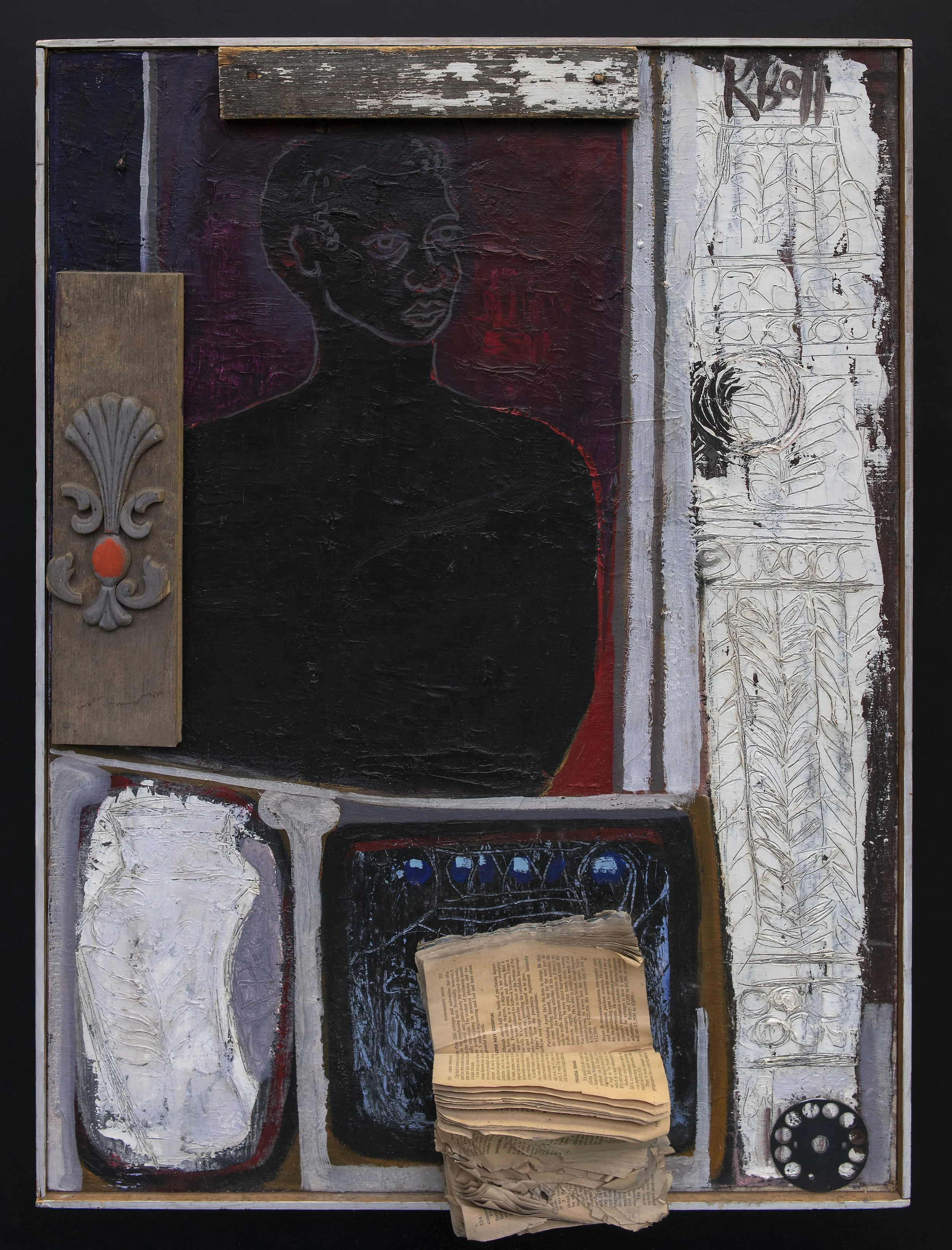
David Driskell, Black Ghetto (c. 1968)
Organized by the Fisk University Galleries and Frist Art Museum and co-curated by Michael Ewing, Frist Art Museum, Associate Curator, and Jamaal B. Sheats, Fisk University Galleries, Director and Curator.
This exhibition opened in the lower level of the Carl Van Vechten Art Gallery at Fisk University and the Frist Art Museum on March 14th, 2025.
1966 marked the centennial year of Fisk University, the oldest institution for higher learning in Nashville,Tennessee. It also represented a moment of transition after the retirement of Aaron Douglas, founder and chair of Fisk's Art Department and a leading figure of the Harlem Renaissance. The appointment of David C. Driskell as Douglas's successor ushered in a broadening view of the African diasporic arts through instructional innovation and the expansion of the university's collections, artist residency programs, and exhibitions. This vision was shared and further realized by faculty members such as Robert Hall, Earl J. Hooks, Stephanie Pogue, and Greg Ridley, among others.
Kindred Spirits frames a critical timeline linking Driskell's tenure (1966–76) with the tenure of one of his preeminent colleagues, professor Earl J. Hooks (1969–99). Co-organized by Fisk University Galleries and the Frist Art Museum, this exhibition will feature more than 50 objects, including archival images and interview documentation, and will act as a companion exhibition to David C. Driskell and Friends: Creativity,Collaboration, and Friendship.
(Lower Gallery)
September 25, 2024 - March 1, 2025

I Broke The House
Beverly Buchanan: I Broke the House at the Carl Van Vechten Art Gallery on view from September 25, 2024 to March 1, 2025.
This exhibition, which originated at ETH Zurich, offers a comprehensive exploration of Beverly Buchanan's (1940–2015) diverse body of work, featuring sculpture, painting, photography, drawing, writing, and printed material.
I Broke the House brings together a wide range of contemporary voices, artworks, and historical contexts. It critically engages with Buchanan's exploration of the built environment, addressing themes of race, memory, and resistance. The exhibition emphasizes Buchanan’s ability to challenge traditional exhibition practices by reimagining the spaces that hold her work. Through her focus on eroded surfaces, vernacular dwellings, and marginalized histories, Buchanan provides a poignant commentary on the sociopolitical landscape of her time.
Curated in collaboration with GTA exhibitions at ETH Zurich, the Engine for Art, Democracy, and Justice (EADJ), and Fisk University, this exhibition project builds on the earlier presentation at ETH Zurich in the spring of 2024. That iteration of I Broke the House involved contributions from a range of artists and scholars, including Elena Bally, Jennifer Burris, María Magdalena Campos-Pons, Aria Dean, Fredi Fischli, Jack Halberstam, Harvard University GSD students, Alicia Henry, Anna Gritz, Tonja Khabir, Parity Group, Prudence Lopp, Park McArthur, Devin T. Mays, Ana Mendieta, Siddhartha Mitter, Kazuko Miyamoto, Senga Nengudi, Niels Olsen, Sarah Richter, Cameron Rowland, Jamaal Sheats, Adam Szymczyk, and the Tubman African American Museum in Macon.
This collaborative project is an exploratory exercise, as Siddhartha Mitter describes it, in "thinking with" Beverly Buchanan's practice and legacy. The presentation at Fisk includes objects from the permanent collection and archive. As part of this ongoing project, Haus am Waldsee in Berlin will also host a future exhibition inspired by Buchanan’s work, continuing the dialogue around her impact on contemporary art, particularly her connection to the American South.
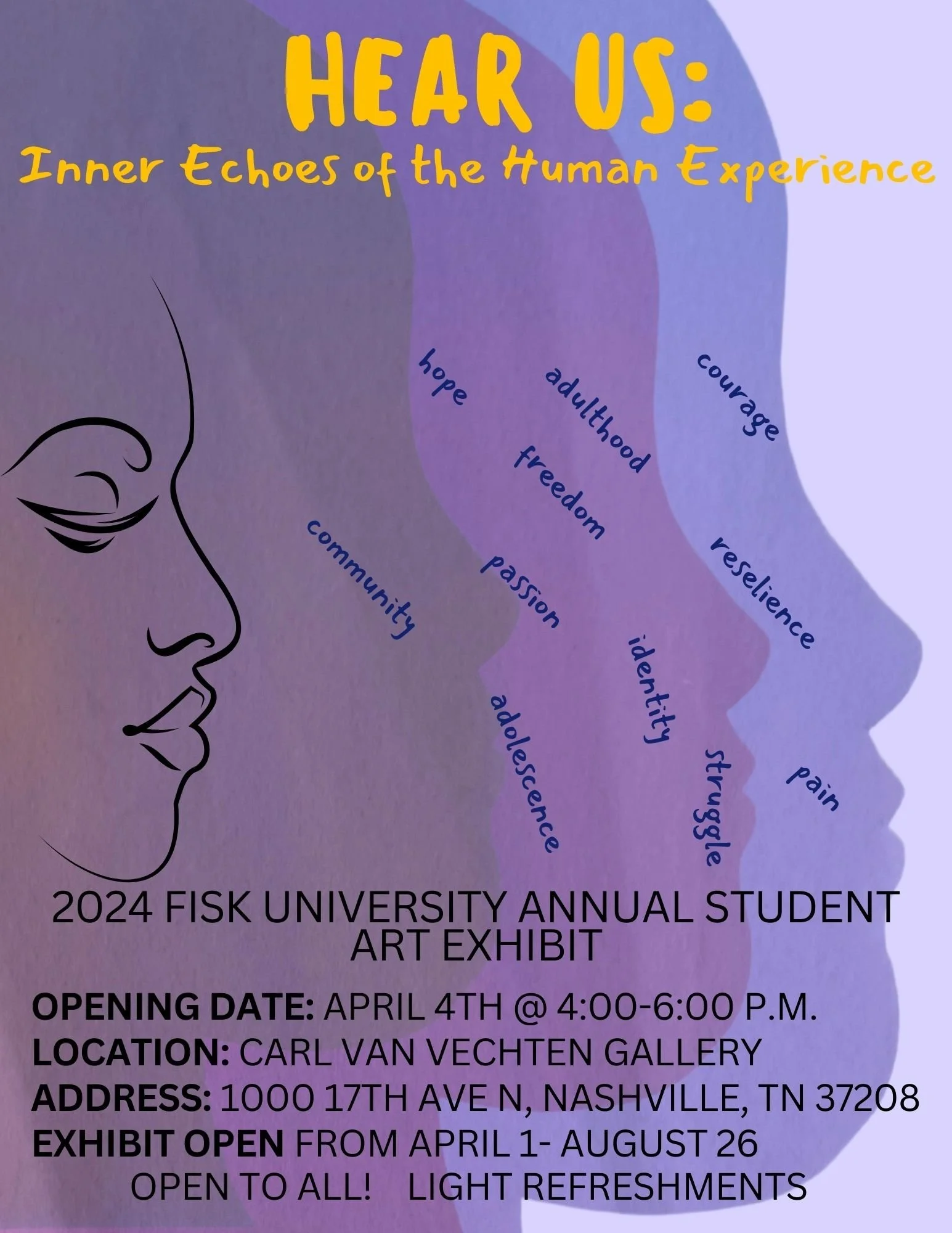
2024 Spring Arts Festival Student Exhibition
Hear Us: Inner Echoes of the Human Experience is about the experiences of Fisk Students as we navigate entering adulthood at an HBCU. The exhibit reflects the various perspectives and experiences we go through as young adults. We felt that our show should represent the inner echos of burgeoning adulthood. We hope our show can invite conversation about difficult topics while celebrating the artistry of Fisk students.
Rod McGaha’s “Regeneration”
Within all communities you will find a fabric of multiple sections that tell their story. This fabric represents the people, places, and belongings, while embracing the spirit and thought process within. During the past few years this cloth has been tested for its strength and durability. Although the pandemic as well as other societal ills have stained and torn apart certain sections, we are now beginning to see a mending alongside a regeneration that is taking place. The cloth is changing to accommodate the new experiences, patch by patch. A new quilt is being created to tell the story of a people who have loved, laughed, cried, and most of all endured.
McGaha's series Regeneration explores the power of art to heal and transform. The series is a visual and auditory journey that tells the story of black resilience and strength. McGaha's work is a must-see for anyone who is interested in exploring how black art is used as part of the healing process.
Rod McGaha

Lower Level
Reference:
Selections from the Collection
Featuring work in collage from such pioneers as David Driskell and Romare Bearden. The work of Sam Middleton, Frances E. Thompson, and contemporary artist and activist, Dread Scott.


Romare Bearden, “The Train”. 1974. Lithograph 16/20 AP.